By Lisa Larrimore Ouellette, Nicholson Price, Rachel Sachs, and Jacob Sherkow
Our recent posts have highlighted shortages in three COVID-19-related knowledge goods:
testing,
drugs (such as those needed to put patients on ventilators), and
clinical trial information about effective treatments. This week we focus on the role of legal regulators in another critical shortage: N95 respirators, one of the key forms of personal protective equipment (PPE) for healthcare workers. We explain how N95 regulation, like COVID-19 testing, presented an
interagency coordination problem. The FDA has successfully removed key regulatory hurdles—though the problem should have been anticipated earlier, and much more needs to be done to ensure an adequate supply.
What are N95 respirators?
N95 respirators are a specialized subset of face masks (here’s a handy
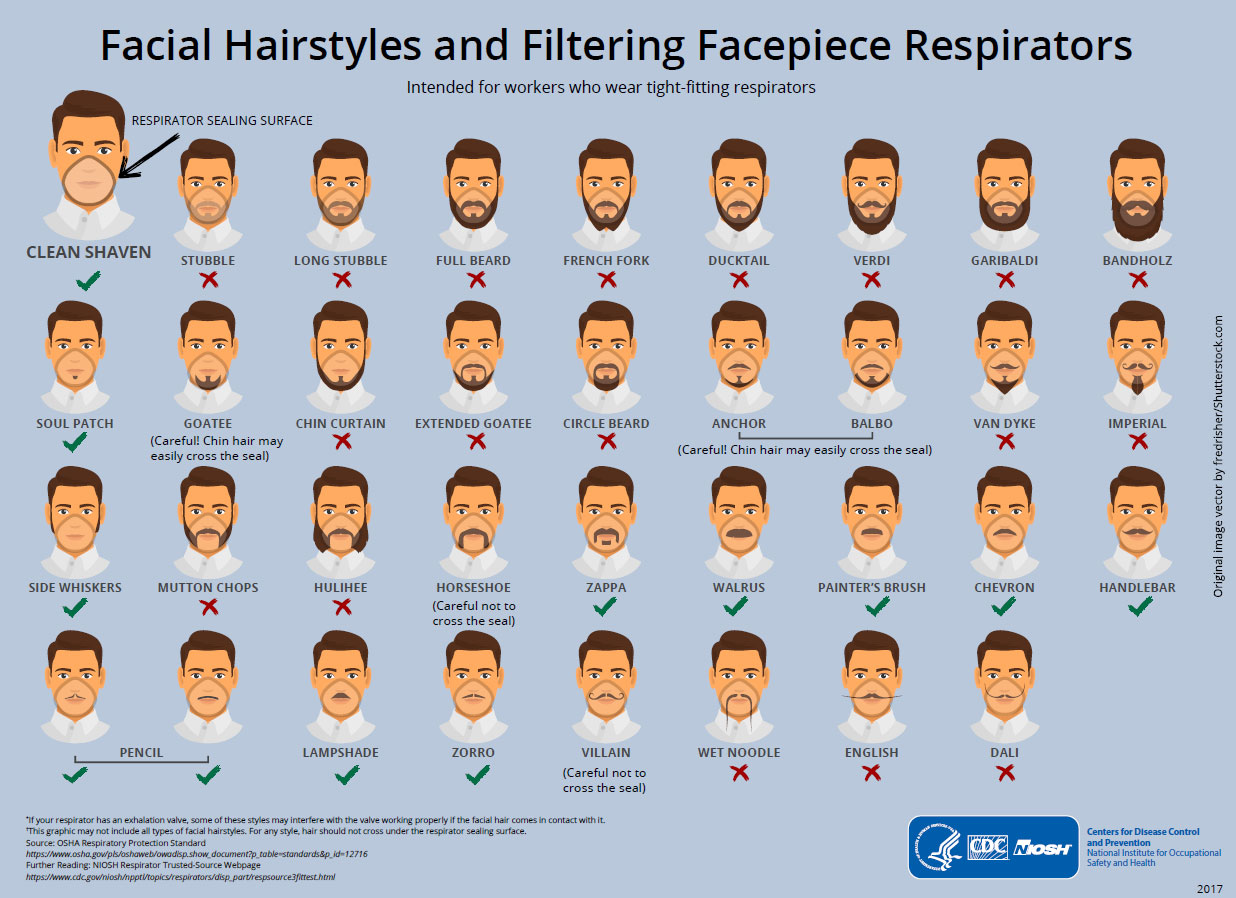
NY Times explainer with photos). A normal surgical mask (what you see, for example, in a typical medical TV show) fits fairly loosely around the face; it blocks splashes and relatively large droplets, but not tiny particles. An N95 respirator, on the other hand, is relatively rigid rather than being flexible, and is designed to fit closely to the face and create a tight seal—tightly enough that the masks don’t work with
certain beards (or for children). The “95” in N95 refers to the requirement that the mask block at least 95% of 0.3 micron particles (about a thousandth the width of a human hair). Both types of masks are meant to be single-use.
N95 masks are meant to keep droplets that include the SARS-CoV-2 virus
out. They’re not perfect, but if they’re well fitted, they are effective at protecting the wearer (most crucially right now, the healthcare providers who are caring for patients and are themselves still
getting sick in droves). Surgical masks, on the other hand, do a worse job of keeping the virus out. Cloth masks even less so. But cloth masks can help keep droplets
in—that is, if someone is sick, wearing a cloth mask may keep them from projecting droplets that can infect other people. The CDC
now recommends that everyone wear a face mask when in public, to avoid infecting other people (because even asymptomatic individuals can infect others, and the
lack of testing means it’s very hard for most people to know whether they have been infected). However, surgical masks and especially N95 masks are in very short supply, and should be reserved for medical professionals.
N95s were
initially developed for industrial uses including mining. The key feature—and what makes N95s harder to manufacture than other masks—is that the masks are made using what’s called “melt-blown” fabric. A polymer (such as polystyrene, polyurethane, or nylon), is melted then blown through small nozzles; it forms a matrix of tiny fibers with many holes (think: cotton candy), which can capture particles. But the machines to make this fabric are complex and expensive, and manufacturers of the fabric
are struggling—and failing—to meet demand.